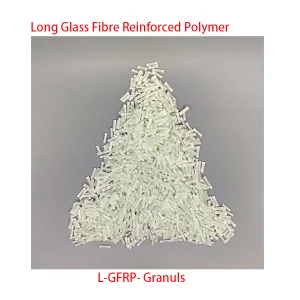
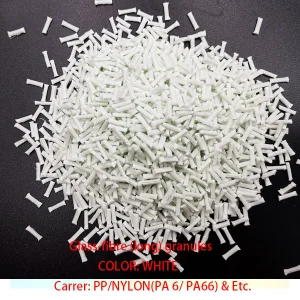
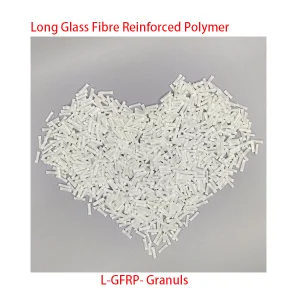
Explore our certified range of Long Glass Fiber (LGF) and Glass Fiber Reinforced Polymer (GFRP) compound materials manufactured to exceed stringent industrial specifications.
Glass Fiber Reinforced Polymer (GFRP) structural solutions represent a milestone in the evolution of materials science, shifting the parameters of structural design away from traditional, corrosion-prone metallic reinforcements. The utilization of continuous glass fiber filaments bonded within an engineered polymer matrix yields high tensile performance, low bulk density, and total chemical inertness to electrochemical oxidation.
In civil engineering contexts, specifically concrete reinforcement, GFRP Fiberglass Rebar operates as a superior structural element compared to carbon steel. Standard steel-reinforced structures operating in highly aggressive environments—such as marine ports, coastal infrastructure, chemical refining zones, and bridge decks exposed to de-icing salts—undergo progressive spalling and mechanical failure due to corrosion. GFRP rebar completely bypasses this degradation mechanism, boasting an absolute resistance to chloride ion attack and acidic degradation, extending service lifecycles to 100+ years.
GFRP rebars provide a tensile strength up to three times higher than typical Grade 60 steel reinforcement, while maintaining only 25% of its structural density (1.9 g/cm³ versus 7.85 g/cm³), significantly dropping logistics and handling costs.
GFRP composites demonstrate zero electrical conductivity and magnetic transparency. This characteristic makes them essential in complex applications such as MRI rooms in medical facilities, high-voltage electrical grid conduits, and toll collection gantries.
Boasting a thermal expansion coefficient aligned closely with cured concrete, GFRP structural composites prevent micro-fissure propagation during seasonal temperature oscillations, optimizing the thermal envelope of structures.
Achieving optimum mechanical properties in GFRP profiles and rebars requires careful formulation of the underlying polymer matrix. At Jurong Best Composite Materials Co., Ltd., we combine technical polymer engineering with advanced pultrusion and compound injection technologies to target precise mechanical performance envelopes.
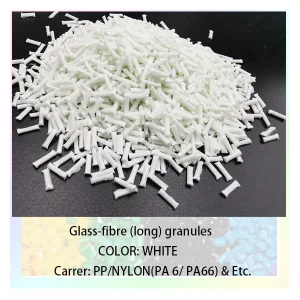
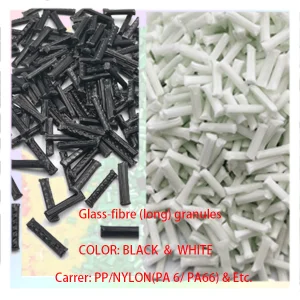
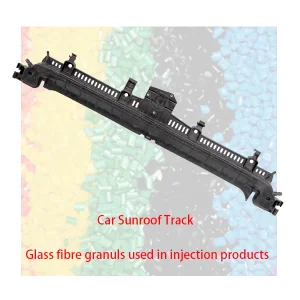
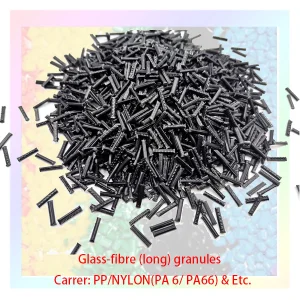
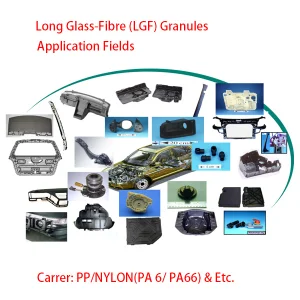
Engineered for high-stress dynamic components, our PA6 and PA66 long-glass fiber reinforced compounds provide excellent impact resistance, high heat deflection temperatures (HDT), and structural stability. Essential for automotive applications like sunroof guides and under-hood components.
A cost-effective, high-toughness matrix that exhibits near-zero moisture absorption and outstanding chemical compatibility with alkaline and acidic fluids. Widely applied in appliance structural housings, fluid control systems, and chemical tanks.
Our long-glass-fiber reinforced Polyphenylene Sulfide (PPS) and Polyphthalamide (PPA) complexes are designed for harsh thermal and chemical environments. They maintain critical mechanical dimensions at continuous operating temperatures exceeding 200°C.
Jurong Best Composite Materials Co., Ltd. is located in the ancient town of Maoshan, which has a history of over a thousand years. The town is part of Jurong City, Zhenjiang, Jiangsu Province. It is situated on the lower reaches of the Yangtze River, adjacent to Nanjing, and is close to Nanjing Lukou International Airport. The Jianning-Taicang Expressway (from Nanjing to Taicang) passes through the area, and the Jurong exit of the Shanghai-Nanjing Expressway connects to Zhenjiang Port and Nanjing Port. Benefiting from the economic integration of the Yangtze River Delta Economic Zone, our transport and logistics networks are highly efficient.
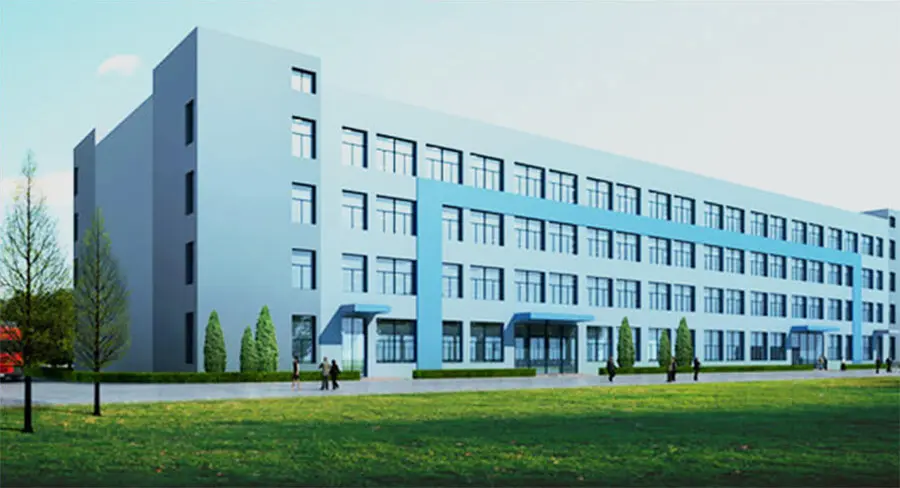
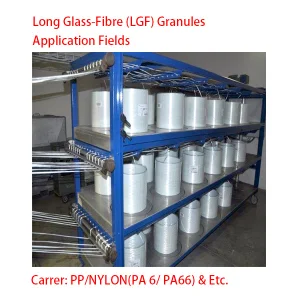
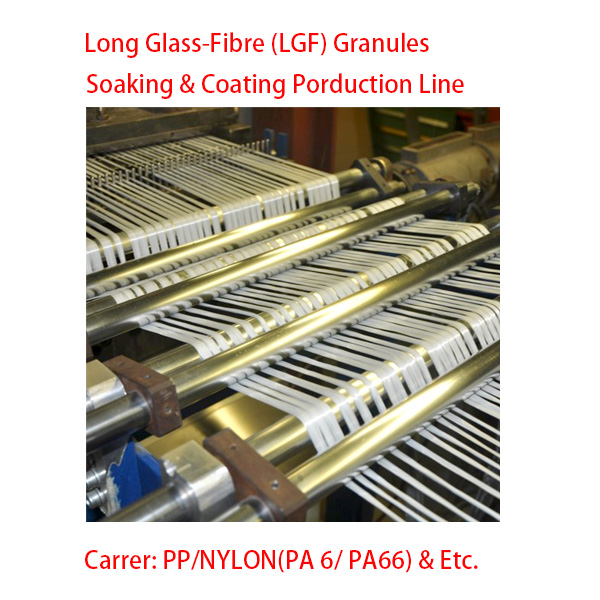
As a premier supplier of GFRP granules and composite products, Jurong Best Composite Materials Co., Ltd. coordinates advanced production technology with robust quality control protocols to assure high product consistency. Our production facility uses fully automated gravimetric feeding lines, twin-screw extruders, and continuous pultrusion lines configured to maintain the structural alignment of glass fiber profiles.
By maintaining raw material quality metrics and optimizing thermal processing parameters, we ensure that our composite products preserve an high aspect ratio of the embedded glass fibers. This structural integrity guarantees that the final injection-molded components or pultruded rebars meet the physical parameters demanded by engineering firms globally.
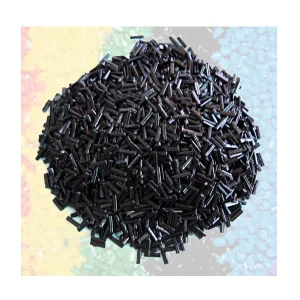
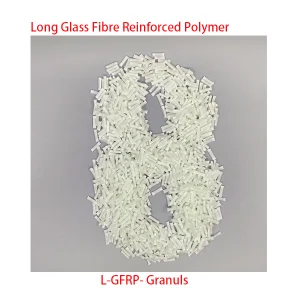
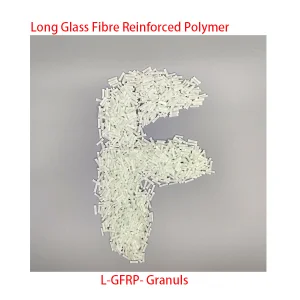
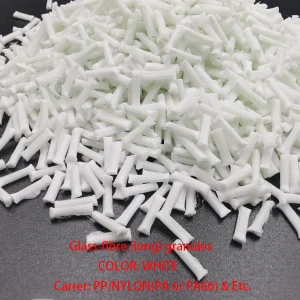
The clients visited our factory today, and conducted a professional and rigorous inspection for the PA6 and PA66 long GFRP (Glass-Fiber-Reinforced-Polymer) granules. They expressed high satisfaction with our products' quality and internal quality control process. Reported by Lu.
Our company has set up a new production line in the workshop and commenced commercial runs today! The process parameters are stabilized, and the output capacity aligns with our global supply commitments.
GFRP technology meets a wide variety of industrial demands, providing specialized solutions that standard plastics or metals cannot replicate. Below are the key sectors utilizing our composite material platforms:
Our LGF-PA6 and LGF-PA66 granules are widely used in structural automotive modules. Examples include sunroof tracks, structural bumper beams, engine brackets, and sub-frame reinforcements. These components reduce vehicle weight while preserving crashworthiness standards.
Our GFRP rebars are widely implemented in bridge decks, maritime retaining walls, sewage treatment facilities, and underground tunnel segments. The lack of rust prevents spalling, maintaining concrete structural integrity.
Our polymer compounds provide structural rigidity, heat resistance, and electrical isolation for washing machine components, mechanical gears, and housing units in small kitchen appliances.
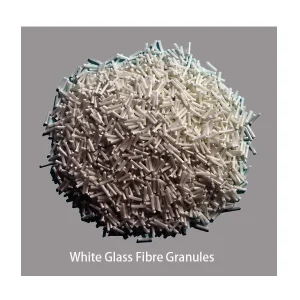
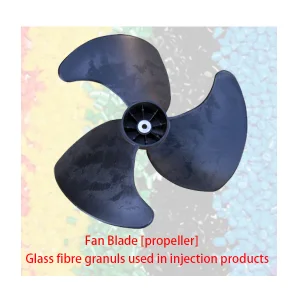
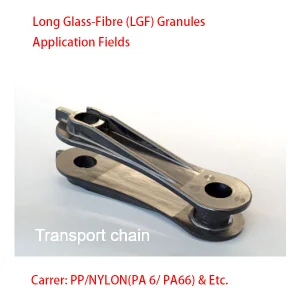
The GFRP granules can make different kinds of special products, such as car parts, washing machine parts, small kitchen electrical appliances, and other structural components requiring high strength-to-weight performance.
The next generation of composite technology focuses on the convergence of sustainability and intelligence. Our R&D team is continually advancing composite material design through key developmental vectors:
Exporting composite compounds and mechanical reinforcing profiles globally requires strict adherence to international regulatory frameworks. Our products carry comprehensive certifications, including:
Our polymer composites and structural rebars comply with the European Union's Construction Products Regulation (CPR) and EN standards, validating safety and mechanical criteria.
GFRP rebars conform strictly with ASTM D7957/D7957M standards and American Concrete Institute (ACI) 440 design guidelines for structural concrete applications.
Our production facilities operate under ISO 9001:2015 Quality Management Systems and ISO 14001:2015 Environmental Systems to ensure batch-to-batch consistency.
Browse our structural polymer variants, including modified Nylon, Polypropylene, and Polyethylene configurations engineered for injection processing.
 Best Composite